by Fiana Gantheret
A Spanish version of this post is available on the CICC Global Justice blog
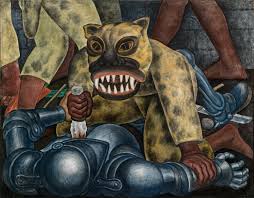
How is it possible for art to capture and represent the nature of large-scale massacres ? the desolation of ravaged countries ? the end of a man’s impunity as well as the end of his freedom ? testimonies on unforgettable and intolerable events ? the attempts to establish the truth ? the ever unanswered questions of victims ?...
In other words, is it possible for art to encapsulate the various aspects of the vast issue that is the accountability of men for large-scale crimes? By making these aspects visible, can art participate in raising awareness about the role and processes of international justice ?
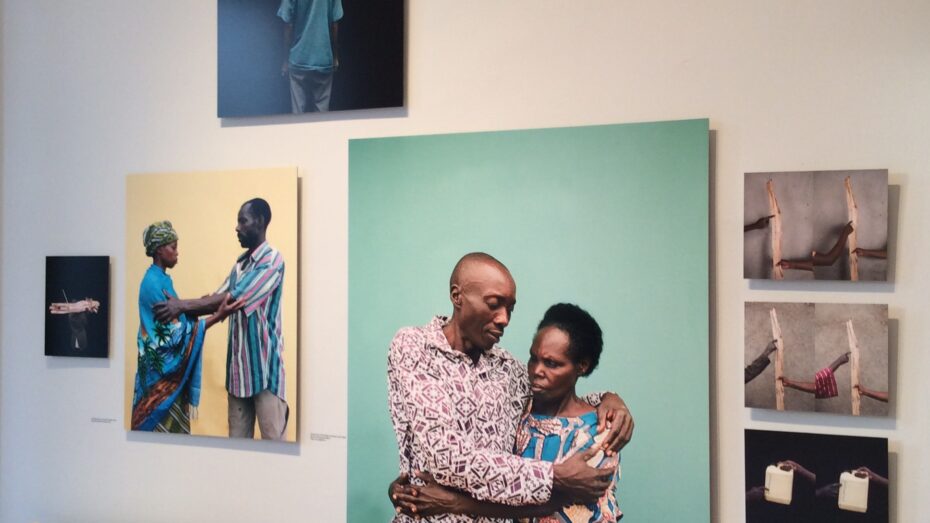
That is apparently the belief of William R. Pace, Convenor of the Coalition for the International Criminal Court (CICC), an international non-governmental organisation advocating to strengthen international cooperation with the International Criminal Court (ICC). Indeed, the CICC launched an Arts Initiative last April aimed at enriching the dialogue on global justice. The Coalition's Arts Initiative to End Impunity was inaugurated with the screening of The Enclave, an audio, video and photo installation on the conflict in the Democratic Republic of Congo by the artist Richard Mosse.
[vimeo 67115692 w=500 h=281]
by Nicola Popovic and Fiana Gantheret
Through designing public and private space, architecture has always been at the crossroads of aesthetics and function. The design of houses, public areas and cities depends maybe more than any other art form on the purpose of its use. Architectural products are an integral part of the life and movement of people. Their given social functions influence their construction. Therefore, typology of architecture, as well as the function and purpose of buildings and public or private spaces, can be indicators of politically-driven actions and initiatives at a given time. Human life and movement have been influenced by the planification and the development of buildings and landscapes. Architecture has grown into a potential mechanism of control of individuals and groups in modern times. Building walls or bridges, the restriction and control of freedom of movement through the design of correction facilities or housing demolition in armed conflicts, are potential infringements on human rights.
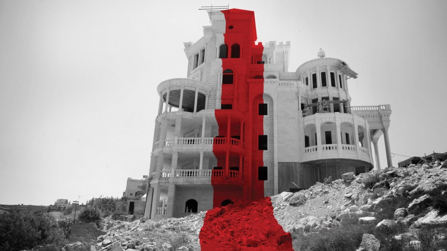
Forensis | The width of the line crossing the “Red Castle” in Battir | Photo: DAAR / Amina Bech
The analysis of the traces of human rights violations in buildings or other physical structures is the subject of Forensic Architecture, a research project funded by the European Research Council and hosted by the Centre for Research Architecture at Goldsmiths, University of London. Forensic Architecture assembles a team of architects, artists, activists and theorists and aims at gathering and presenting evidence in legal contexts and forums, and more specifically in the context of human rights and international criminal legal investigations.
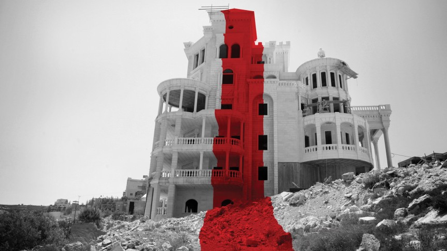
Forensis | The width of the line crossing the “Red Castle” in Battir | Photo: DAAR / Amina Bech
The analysis of the traces of human rights violations in buildings or other physical structures is the subject of Forensic Architecture, a research project funded by the European Research Council and hosted by the Centre for Research Architecture at Goldsmiths, University of London. Forensic Architecture assembles a team of architects, artists, activists and theorists and aims at gathering and presenting evidence in legal contexts and forums, and more specifically in the context of human rights and international criminal legal investigations.
by Nicola Popovic
I look at the picture of a Serbian artist whose work is being exposed in my neighborhood. I should really go, I think to myself, while I continue reading the magazine I just bought:
…music performance, comedy shows, art galleries, short stories…
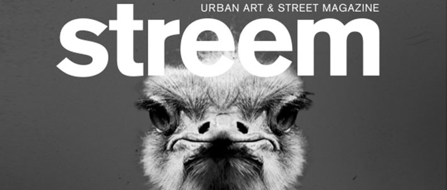
Cultural events are everywhere in Berlin. The train bringing my friend and I home rumbles through the colorful overload of creativity reigning in this city. I look at the man who just sold me the magazine Streem I am flicking through. He is probably my age and is still talking, telling me about the many supporters the magazine has. The list includes soccer players, actors and local politicians. He slurs, his eyes blink incredibly slowly while his head slowly moves back and forth. His brown hair is held back with a baseball cap.
I look at the picture of a Serbian artist whose work is being exposed in my neighborhood. I should really go, I think to myself, while I continue reading the magazine I just bought:
…music performance, comedy shows, art galleries, short stories…
Cultural events are everywhere in Berlin. The train bringing my friend and I home rumbles through the colorful overload of creativity reigning in this city. I look at the man who just sold me the magazine Streem I am flicking through. He is probably my age and is still talking, telling me about the many supporters the magazine has. The list includes soccer players, actors and local politicians. He slurs, his eyes blink incredibly slowly while his head slowly moves back and forth. His brown hair is held back with a baseball cap.
by Fiana Gantheret
For once, it is not about our jobs, our cities, our hobbies, our habits. For once, it is not about something that only concerns some of us.
For once, but once more, it concerns all of us and moves us all.
One image, one picture, and this all too familiar feeling of being caught up…
By Nicola Popovic
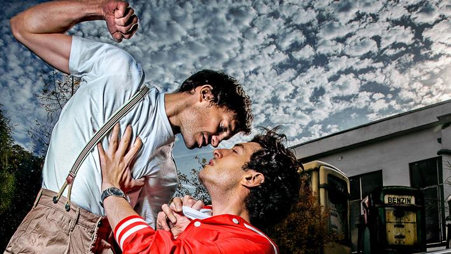
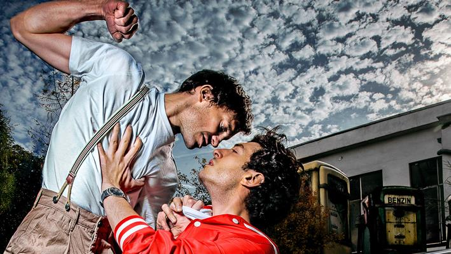
Gender roles manifesting the perceptions of what is supposed to be feminine and what is supposed to be masculine, is neither new on stage nor in reality. But for a play to be able to go beyond the parody of the masculine and feminine without ridiculing one or the other may be one of the challenges in contemporary theatre. Small Town Boy playfully overcomes any sort of gender categories and takes us through all layers of human emotions, intimacy and social dynamics, in two hours of high speed performance.
“From an intellectual porn star to romantic gay lovers to a sensitive soldier on active duty… contemporary images of men are in the centre of Falk Richter’s latest project. The limits of male heterosexuality remain particularly disputed today, as spectre of real freedom and equality for all sexes has led to fear and resistance. If men also deny their previous role in the patriarchy and just do whatever they want, then who will continue to protect and preserve Western civilisation?” (Gorky Newsletter; 3. April-May 2014)
“Small Town Boy” actors: Mehmet Ateşçi / Niels Bormann / Lea Draeger / Aleksandar Radenković / Thomas Wodianka; Director: Falk Richter, Stage and costume: Katrin Hoffmann, Music Matthias Grübel, Lights: Carsten Sander, Dramaturgy: Jens Hillje / Daniel Richter
by Fiana Gantheret
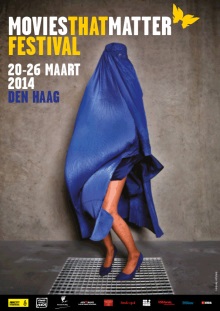
A small entry into often incredibly violent worlds. That is what the Movies that Matter Festival offers. A regular feature in The Hague for some years now, the festival took place this year between 20 and 26 March 2014. This post focuses more particularly on three movies that featured in the selection: Pussy Riot: A Punk Prayer by Mike Lerner and Maxim Pozdorovkin, Viva Cuba Libre: Rap is War by Jesse Acevedo, and Ai Weiwei: The Fake Case by Andreas Johnson.
The focus of these three movies is freedom of expression and its violation by the state apparatus. The main characters fight to speak out, either about the state itself, or at least without any censorship. The latter is of course linked to the former, given that being able to speak without limits in the societies depicted in the movies entails saying Fuck Off to the system. The means to reach that goal: art. Punk music and performance in Pussy Riot; rap music in Rap is War; and conceptual art - photography, sculptures, installations - in The Fake Case.
Context(s)
Pussy Riot is about the trial of three members of the russian punk feminist movement Pussy Riot created in 2011: Nadejda Tolokonnikova, Maria Alekhina, and Ekaterina Samoutsevitch. The three women were arrested after having staged a performance on 21 February 2012 on the soleas of the Cathedral Christ the Savior in Moscow to protest the support of the leader of the Orthodox Church to Vladimir Putin during the elections. They were sentenced on 17 July 2012 to two years imprisonment. On appeal, Ekaterina Samoutsevitch's sentence was suspended.
https://www.youtube.com/watch?v=E8K8WRRzbQs
A small entry into often incredibly violent worlds. That is what the Movies that Matter Festival offers. A regular feature in The Hague for some years now, the festival took place this year between 20 and 26 March 2014. This post focuses more particularly on three movies that featured in the selection: Pussy Riot: A Punk Prayer by Mike Lerner and Maxim Pozdorovkin, Viva Cuba Libre: Rap is War by Jesse Acevedo, and Ai Weiwei: The Fake Case by Andreas Johnson.
The focus of these three movies is freedom of expression and its violation by the state apparatus. The main characters fight to speak out, either about the state itself, or at least without any censorship. The latter is of course linked to the former, given that being able to speak without limits in the societies depicted in the movies entails saying Fuck Off to the system. The means to reach that goal: art. Punk music and performance in Pussy Riot; rap music in Rap is War; and conceptual art - photography, sculptures, installations - in The Fake Case.
Context(s)
Pussy Riot is about the trial of three members of the russian punk feminist movement Pussy Riot created in 2011: Nadejda Tolokonnikova, Maria Alekhina, and Ekaterina Samoutsevitch. The three women were arrested after having staged a performance on 21 February 2012 on the soleas of the Cathedral Christ the Savior in Moscow to protest the support of the leader of the Orthodox Church to Vladimir Putin during the elections. They were sentenced on 17 July 2012 to two years imprisonment. On appeal, Ekaterina Samoutsevitch's sentence was suspended.
https://www.youtube.com/watch?v=E8K8WRRzbQs
The Intergovernmental Commission on Human Rights of the Association of Southeast Asian Nations organizes a Youth Competition on Arts and Human Rights. The aim is to raise awareness about human rights and the ASEAN Human Rights Declaration (AHRD) adopted in November 2012 among its youth.
Young nationals (between the ages of 18 and 25) of the ten ASEAN Members…
By Fiana Gantheret
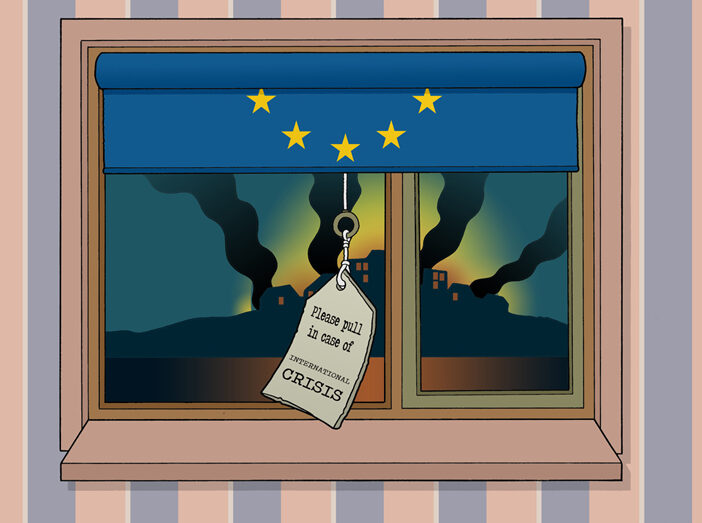
On the occasion of the bicentennial of the Dutch Constitution, the Cartoon Movement, together with Word Press Photo, the City of The Hague and the Ministry of Foreign Affairs launched on 29 March 2014 the Peace and Justice cartoon project at the Peace Palace in The Hague, The Netherlands.
With reference to Article 90 of the Constitution, which provides that "The Government shall promote the development of the international rule of law", the project aims at triggering a debate on peace and justice through a series of guest lectures in several countries and the sharing of ideas that will follow these lectures. The students will be invited to share their thoughts by sending their tweets, sketches, comments and photos, that professional cartoonists will then transform into cartoons.
Here is a presentation of the project:
https://www.youtube.com/watch?v=SMmTctrhYrQ
By Nicola Popovic
Strolling along Berlin, it is impossible to overlook the numerous graffitis and, after all, mural art work visible at every street corner. Public art, which is what mural art has developed into, is part of our everyday media consumption, walking to the bus station or waiting at a traffic light. Political views and discussions are exchanged through symbols, words, and paintings, on walls and on buildings, in many cities around the globe.
In Berlin, the most prominent example of mural art is the accumulation over decades of layers of paintings and graffitis on the Berlin wall, the symbol of the division between two political ideologies, regimes and economic systems as it took place in one city. As shown by the Wall on Wall project, the Berlin wall, the Peace Line in Belfast, or the wall in Palestine are examples of dividing constructions which have been re-used as visual platforms for individual expressions of collective emotions concerning such disunion.
The Lady in Number 6: Music Saved my Life, is a short movie of 38 minutes released in 2014 by its director, Malcolm Clarke, and nominated at the 2014 Oscars in the Documentary Short category.
http://www.youtube.com/watch?v=LrXHcQyixTE
It tells the story of a 109 years old lady named Alice Herz Sommer, and what a story. Born in Prague…
By Nicola Popovic
Now that I put my gun down
For almost obvious reasons
The enemy still there invisible
My barrel has no definite target
Now
Let my hands work-
My mouth sing-
My pencil write-
About the same things my bullet aimed at.
© Freedom Nyamubaya
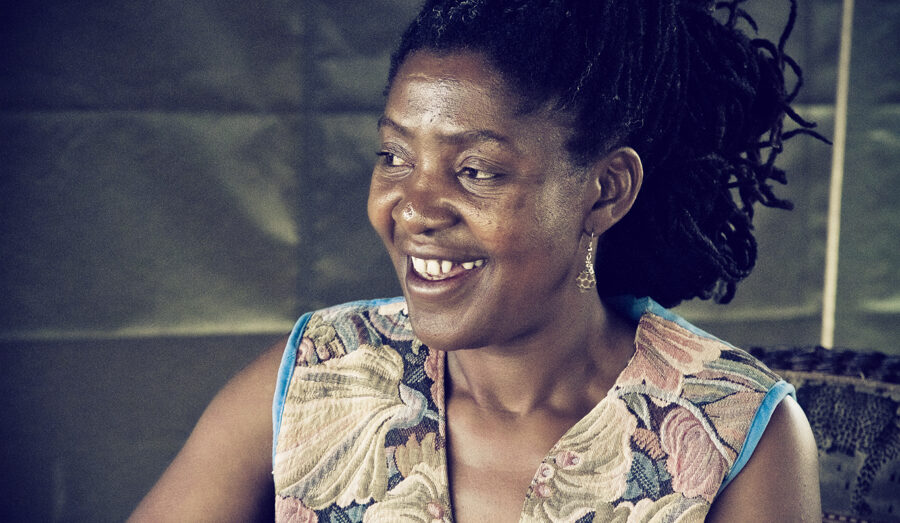
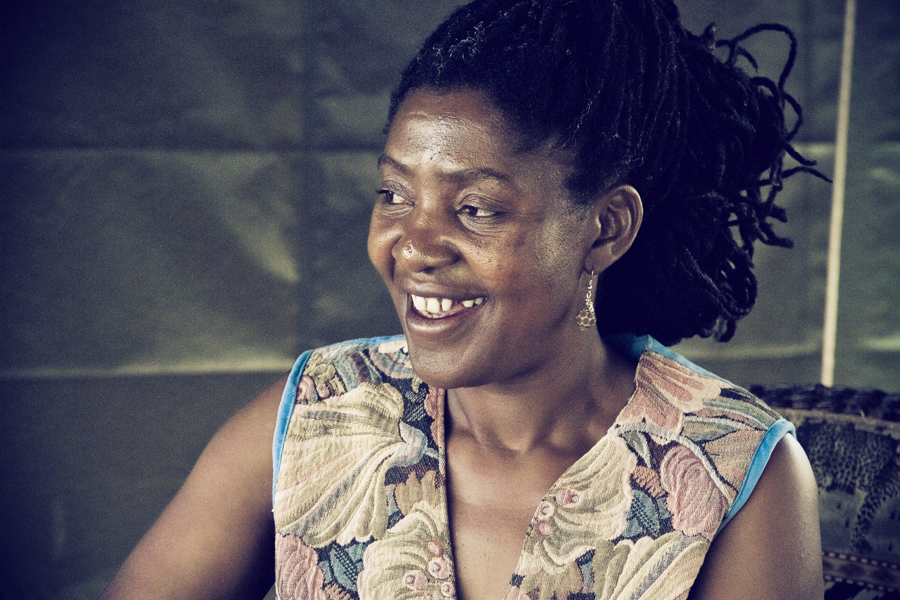
Freedom Nyamubaya took on her guerilla name when she joined the liberation movement in the late seventies in Rhodesia/Zimbabwe. She fought together with men, mostly, in order to obtain free elections and recognition of human rights for the black majority in the former British colony. When she speaks about her decision at the time to join the rebels across the border in Mozambique, the expression on her face mirrors the teenage girl that was fascinated by the spiritual power radiating from the freedom fighters, disappointed by the conservative Christian education, and denied the possibilities the white kids were offered in the seventies’ Southern Africa.
By Fiana Gantheret
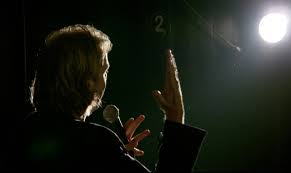
The Happy Sad Route (and a Comedian) by Linda Hakeboom: a documentary movie about the road trip of a Dutch man in Bosnia and Herzegovina, Croatia and Serbia. A Dutch stand-up comedian Jan Jaap van der Wal, alias JJ, goes on a journey in the former Yugoslavia to meet with fellow comedians. The trailer can be viewed here.
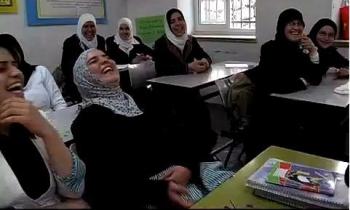
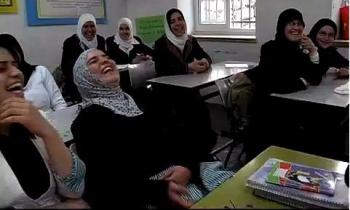
(No) Laughing Matter (Blagues à part), by Vanessa Rousselot: a documentary film looking at expressions of humor in Palestine. Vanessa Rousselot embarks on a journey in the West Bank to find out what Palestinians have to say about their own sense of humor. The trailer can be viewed here. The English version of the movie can be accessed here.
The two movies approach situations in which people have experienced or still experience a hard way of life. What are the reactions there when humor is mentioned? What do they joke about? Is humor a necessity or a luxury? Through the themes of laughter and distance, Vanessa Rousselot and Linda Hakeboom deal with sensitive issues in a subtle and profound way.
(No) Laughing Matter (Blagues à part), by Vanessa Rousselot: a documentary film looking at expressions of humor in Palestine. Vanessa Rousselot embarks on a journey in the West Bank to find out what Palestinians have to say about their own sense of humor. The trailer can be viewed here. The English version of the movie can be accessed here.
The two movies approach situations in which people have experienced or still experience a hard way of life. What are the reactions there when humor is mentioned? What do they joke about? Is humor a necessity or a luxury? Through the themes of laughter and distance, Vanessa Rousselot and Linda Hakeboom deal with sensitive issues in a subtle and profound way.