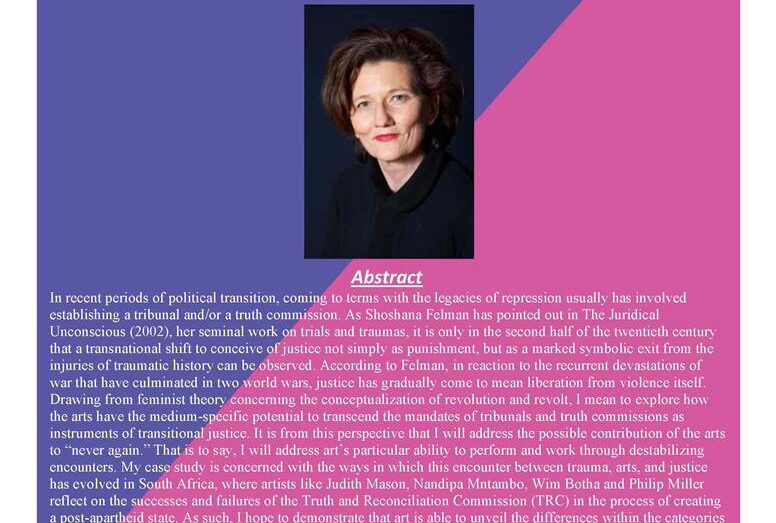
The upcoming lecture by Professor Rosemarie Buikema organized by the Research Center for Gender and Sexuality of the University of Amsterdam will take place on Thursday 10 December 2015 on the fascinating subject of the definition of justice in transitioning countries.
Reflecting on the work of Professor Shoshana Felman, Professor Buikema describes how this definition has evolved…
The Hague Talks, initiated at the beginning of 2015, is a series of events organised throughout the world engaging a very creative and fruitful debate on "Setting peace and justice in motion".
One of the next events is a discussion entitled YOUR PEACE, MY PEACE: LET'S KICKSTART PEACE NOW!, inviting creators form all over the world to share their experience…
#EyesWideOpen
By Andrea Breslin
"The right to the truth – which is both an individual and collective right – is essential for victims but also for society at large. Uncovering the truth of human rights violations of the past can help prevent human rights abuses in the future."
UN Secretary-General Ban Ki-moon
The Look of…
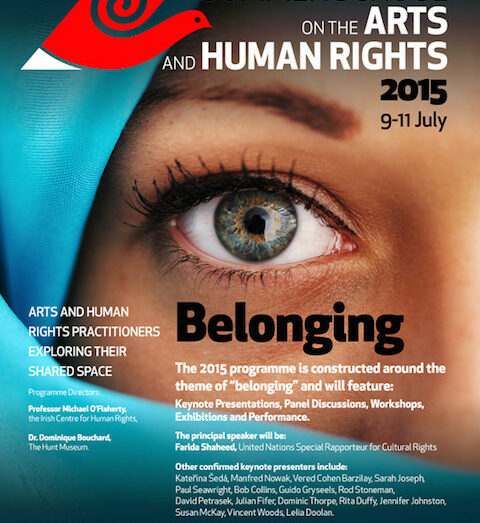
The Inaugural Galway International Summer School on the Arts and Human Rights will take place from 9 to 11 July 2015 at the National University of Ireland, Galway, and is co-directed by Professor Micheal O'Flaherty, Director of the Irish Centre for Human Rights, and Dr Dominique Bouchard, curator at the Hunt Museum. The summer school will explore…
by Fiana Gantheret
The question of the way different fields come together to enrich international criminal investigations and legal work was already touched upon here on Creating Rights when looking at Eyal Weizmann's and Susan Schuppli's project Forensic Architecture, a research project at the crossroads of international human rights law, architecture and engineering.
See You in The Hague by Stroom Den Haag, "a multifaceted narrative…
Par Fiana Gantheret
English version available here
A la suite des évènements tragiques de janvier 2015 à Paris, un débat impliquant deux principes a resurgi : la liberté d’expression, d’une part, et la prohibition de discours appelant à la haine, de l’autre. La raison principale en est la mobilisation massive qui a suivie l’attaque de Charlie Hebdo. En effet, plus d’un million de personnes en France ont manifesté afin de proclamer « Je suis Charlie », et par là-même leur « attachement indéfectible à la liberté d’expression ». Une autre raison est qu’à la suite de la tuerie à Charlie Hedbo, qui a été suivie, entre autres, par une attaque à caractère antisémite, plus de 70 procédures ont été initiées pour apologie du terrorisme ainsi que pour incitation à la discrimination et à la haine raciale, en réaction à des propos tenus par des individus soutenant les actions des terroristes ou à tout le moins les minimisant. A cet égard, la Garde des Sceaux, Christine Taubira, a donné les instructions suivantes dans une circulaire aux parquets :
A l’heure où la France est frappée en plein cœur par le terrorisme et où les fondements même de la démocratie sont visés, le ministère public doit veiller à préserver les grands principes de la République et poursuivre son action de protection de la liberté d’expression, indissociable de la démocratie.
L’article 10 de la Convention européenne des droits de l’homme ainsi que les articles 10 et 11 de la Déclaration des Droits de l’Homme et du Citoyen proclament les principes de liberté d’opinion et d’expression qui ne peuvent être limités que dans les cas déterminés par la loi.
Dans ces moments où la nation doit montrer son unité, les propos ou agissements répréhensibles, haineux ou méprisants, proférés ou commis en raison de l’appartenance à une religion doivent être combattus et poursuivis avec la plus grande vigueur.
By Fiana Gantheret
Version française disponible ici
Following the tragic events that unfolded in January in Paris this year, a debate linking two principles have re-emerged: freedom of expression on the one hand, prohibition of hate speech on the other hand. The main reason for this is the humongous support and sense of community that arose after the attacks on Charlie Hebdo. Indeed, more than a million people in France demonstrated in order to say “I am Charlie”, and thereby, to show their “unfailing attachment to the freedom of expression”. Another reason is that in the wave of this attack and the antisemitic one that followed it, more than 70 judicial proceedings for condoning terrorism and inciting to hate and discrimination were initiated against individuals that voiced support to the terrorists or minimised their actions. Instructions were given by the French Justice Minister Christiane Taubira to national prosecutors to investigate and initiate proceedings against those types of acts:
At a time when France is struck in the heart by terrorism and where the very foundations of democracy are under attack, the public prosecutor must maintain the main principles of the Republic and continue its efforts to protect the freedom of expression, inseparable from democracy.
Article 10 of the European Convention on Human Rights and Articles 10 and 11 of the Declaration of the Rights of Man and the Citizen proclaim the principles of freedom of opinion and expression which cannot be limited outside the cases determined by law.
In these times when the nation must display unity, reprehensible words or acts of hatred or contempt made because of religious affiliation must be fought with the utmost vigor.
By Andrea Breslin and Orla Lehane
“Tread lightly for you tread on my realities”
Irish playwright Connell Morrison’s above reflection, referencing his attempt to bring his stunning interpretation of Antigone to a Palestinian theatre group, highlights some of the ethical dilemmas surrounding the reduction of the complexity of conflict situations into a narrative for theatre.…
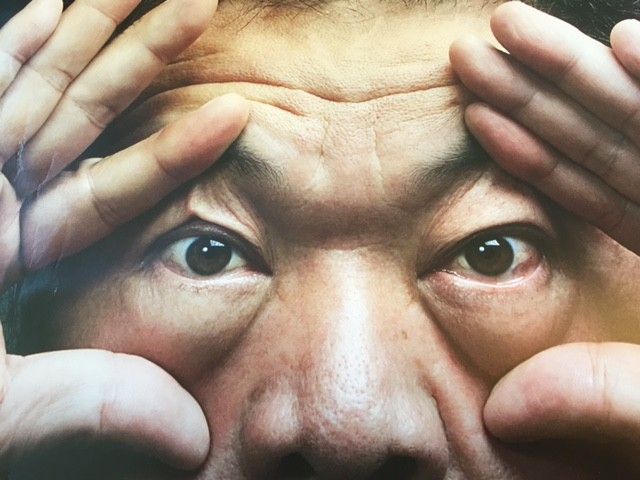
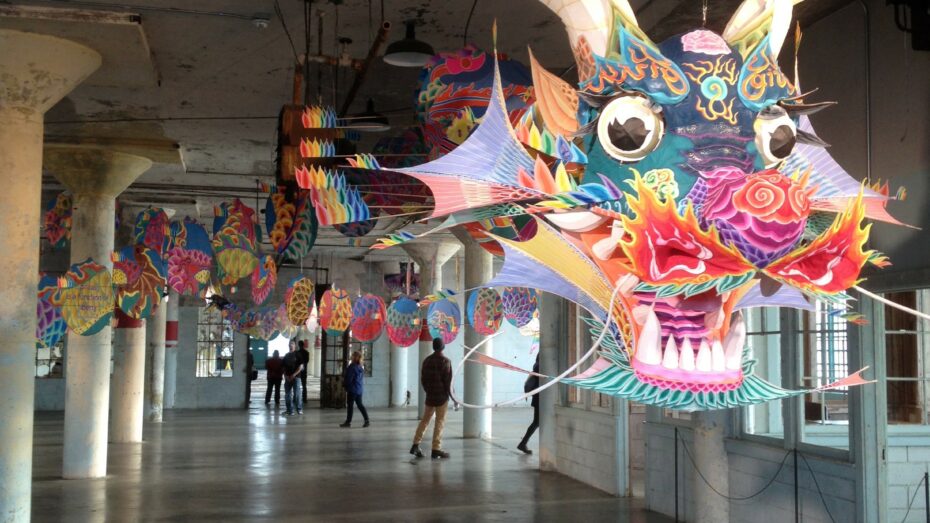
Ai Weiwei exposé à Alcatraz, Par Marie-Pierre Poulain
La baie de San Francisco, ses péninsules, ses puissants courants marins, luisent sous le soleil de décembre. Sur le grand ferryboat blanc qui nous emmène à Alcatraz, l'île fortifiée se dessine, assez proche, coiffée d'un long bâtiment blanc ponctué d'un phare.
Des mouettes se jouent de l'air pour venir…
Dear readers
thank you again for following the development of Creating Rights! We want to share two news with you.
First, we are proud to announce that as of January 2015, Creating Rights is a non-profit organization, with its main seat in The Hague, The Netherlands. Creating Rights seeks to engage in projects promoting human rights through art. Its aim…
Ces grands noms, ces visages, ces dessins, que l’on connaissait comme une part de nous-mêmes, avec lesquels nous avons vécu, grandi, évolué.
Ces valeurs de liberté, d’égalité, de création qui ne voulaient pas être des principes, mais qui ont été poussées à l’être face à des extrémistes attachés eux à des principes ne souffrant pas d’exister…