By Juliette Remond-Tiedrez
In 2011, Theatre Without Borders and Brandeis university’s programme in Peacebuilding and the Arts created an Acting Together on the World Stage: Performance and the Creative Transformation of Conflict documentary and toolkit. Combined with a two-volume anthology (which will not be reviewed here), the documentary and the toolkit form part of a project…
By Njomza Miftari
“Enforced disappearances” is a phrase that is not frequently mentioned in the European human rights context, however, this is not the case in regions such as Latin America where enforced disappearances has dreadfully impacted thousands of families in the last decades. “Who killed my brother?”, is a documentary directed by Ana Fraile and…
By Fiana Gantheret
Lidija Zelović, a Bosnian journalist and filmmaker from a Serbian/Croatian family, left Sarajevo in 1992 when the war came to her home town. She flew to The Netherlands, leaving behind her brother and parents. They joined her in Amsterdam two years later.
Lidija Zelović has followed the conflicts in former Yugoslavia as a journalist…
by Fiana Gantheret
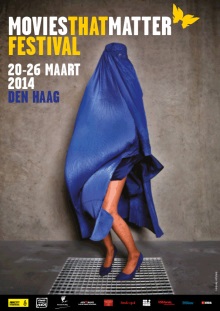
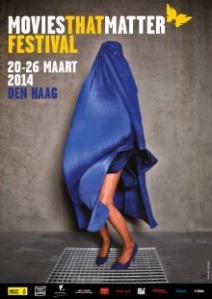
A small entry into often incredibly violent worlds. That is what the Movies that Matter Festival offers. A regular feature in The Hague for some years now, the festival took place this year between 20 and 26 March 2014. This post focuses more particularly on three movies that featured in the selection: Pussy Riot: A Punk Prayer by Mike Lerner and Maxim Pozdorovkin, Viva Cuba Libre: Rap is War by Jesse Acevedo, and Ai Weiwei: The Fake Case by Andreas Johnson.
The focus of these three movies is freedom of expression and its violation by the state apparatus. The main characters fight to speak out, either about the state itself, or at least without any censorship. The latter is of course linked to the former, given that being able to speak without limits in the societies depicted in the movies entails saying Fuck Off to the system. The means to reach that goal: art. Punk music and performance in Pussy Riot; rap music in Rap is War; and conceptual art - photography, sculptures, installations - in The Fake Case.
Context(s)
Pussy Riot is about the trial of three members of the russian punk feminist movement Pussy Riot created in 2011: Nadejda Tolokonnikova, Maria Alekhina, and Ekaterina Samoutsevitch. The three women were arrested after having staged a performance on 21 February 2012 on the soleas of the Cathedral Christ the Savior in Moscow to protest the support of the leader of the Orthodox Church to Vladimir Putin during the elections. They were sentenced on 17 July 2012 to two years imprisonment. On appeal, Ekaterina Samoutsevitch's sentence was suspended.
https://www.youtube.com/watch?v=E8K8WRRzbQs
A small entry into often incredibly violent worlds. That is what the Movies that Matter Festival offers. A regular feature in The Hague for some years now, the festival took place this year between 20 and 26 March 2014. This post focuses more particularly on three movies that featured in the selection: Pussy Riot: A Punk Prayer by Mike Lerner and Maxim Pozdorovkin, Viva Cuba Libre: Rap is War by Jesse Acevedo, and Ai Weiwei: The Fake Case by Andreas Johnson.
The focus of these three movies is freedom of expression and its violation by the state apparatus. The main characters fight to speak out, either about the state itself, or at least without any censorship. The latter is of course linked to the former, given that being able to speak without limits in the societies depicted in the movies entails saying Fuck Off to the system. The means to reach that goal: art. Punk music and performance in Pussy Riot; rap music in Rap is War; and conceptual art - photography, sculptures, installations - in The Fake Case.
Context(s)
Pussy Riot is about the trial of three members of the russian punk feminist movement Pussy Riot created in 2011: Nadejda Tolokonnikova, Maria Alekhina, and Ekaterina Samoutsevitch. The three women were arrested after having staged a performance on 21 February 2012 on the soleas of the Cathedral Christ the Savior in Moscow to protest the support of the leader of the Orthodox Church to Vladimir Putin during the elections. They were sentenced on 17 July 2012 to two years imprisonment. On appeal, Ekaterina Samoutsevitch's sentence was suspended.
https://www.youtube.com/watch?v=E8K8WRRzbQs
By Fiana Gantheret
The Happy Sad Route (and a Comedian) by Linda Hakeboom: a documentary movie about the road trip of a Dutch man in Bosnia and Herzegovina, Croatia and Serbia. A Dutch stand-up comedian Jan Jaap van der Wal, alias JJ, goes on a journey in the former Yugoslavia to meet with fellow comedians. The trailer can be viewed here.
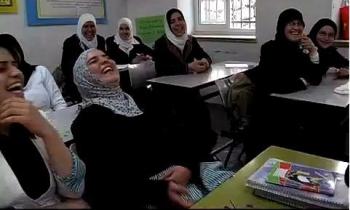
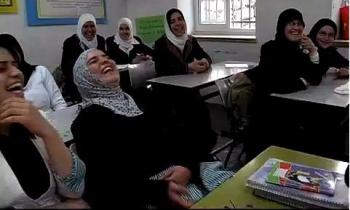
(No) Laughing Matter (Blagues à part), by Vanessa Rousselot: a documentary film looking at expressions of humor in Palestine. Vanessa Rousselot embarks on a journey in the West Bank to find out what Palestinians have to say about their own sense of humor. The trailer can be viewed here. The English version of the movie can be accessed here.
The two movies approach situations in which people have experienced or still experience a hard way of life. What are the reactions there when humor is mentioned? What do they joke about? Is humor a necessity or a luxury? Through the themes of laughter and distance, Vanessa Rousselot and Linda Hakeboom deal with sensitive issues in a subtle and profound way.
(No) Laughing Matter (Blagues à part), by Vanessa Rousselot: a documentary film looking at expressions of humor in Palestine. Vanessa Rousselot embarks on a journey in the West Bank to find out what Palestinians have to say about their own sense of humor. The trailer can be viewed here. The English version of the movie can be accessed here.
The two movies approach situations in which people have experienced or still experience a hard way of life. What are the reactions there when humor is mentioned? What do they joke about? Is humor a necessity or a luxury? Through the themes of laughter and distance, Vanessa Rousselot and Linda Hakeboom deal with sensitive issues in a subtle and profound way.