By Fiana Gantheret
Version française disponible ici
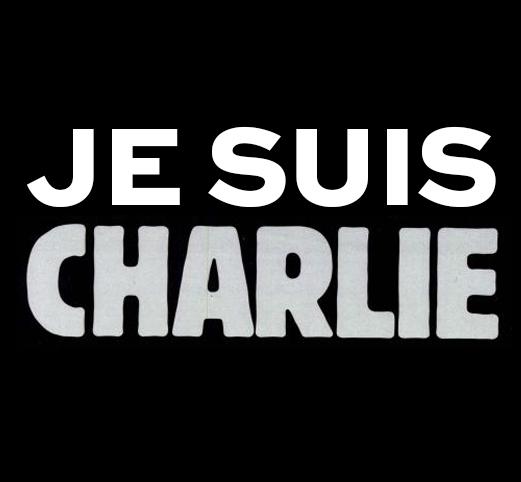
Following the tragic events that unfolded in January in Paris this year, a debate linking two principles have re-emerged: freedom of expression on the one hand, prohibition of hate speech on the other hand. The main reason for this is the humongous support and sense of community that arose after the attacks on Charlie Hebdo. Indeed, more than a million people in France demonstrated in order to say “I am Charlie”, and thereby, to show their “unfailing attachment to the freedom of expression”. Another reason is that in the wave of this attack and the antisemitic one that followed it, more than 70 judicial proceedings for condoning terrorism and inciting to hate and discrimination were initiated against individuals that voiced support to the terrorists or minimised their actions. Instructions were given by the French Justice Minister Christiane Taubira to national prosecutors to investigate and initiate proceedings against those types of acts:
At a time when France is struck in the heart by terrorism and where the very foundations of democracy are under attack, the public prosecutor must maintain the main principles of the Republic and continue its efforts to protect the freedom of expression, inseparable from democracy.
Article 10 of the European Convention on Human Rights and Articles 10 and 11 of the Declaration of the Rights of Man and the Citizen proclaim the principles of freedom of opinion and expression which cannot be limited outside the cases determined by law.
In these times when the nation must display unity, reprehensible words or acts of hatred or contempt made because of religious affiliation must be fought with the utmost vigor.
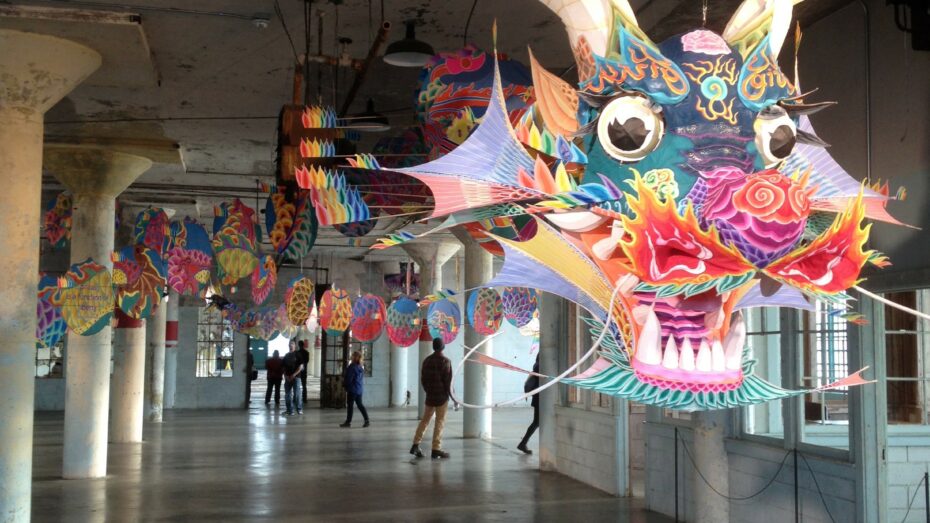
Ai Weiwei exposé à Alcatraz, Par Marie-Pierre Poulain
La baie de San Francisco, ses péninsules, ses puissants courants marins, luisent sous le soleil de décembre. Sur le grand ferryboat blanc qui nous emmène à Alcatraz, l'île fortifiée se dessine, assez proche, coiffée d'un long bâtiment blanc ponctué d'un phare.
Des mouettes se jouent de l'air pour venir…
By Nicola Popovic
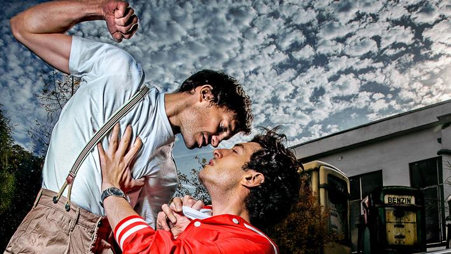
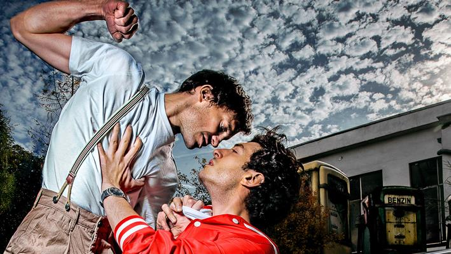
Gender roles manifesting the perceptions of what is supposed to be feminine and what is supposed to be masculine, is neither new on stage nor in reality. But for a play to be able to go beyond the parody of the masculine and feminine without ridiculing one or the other may be one of the challenges in contemporary theatre. Small Town Boy playfully overcomes any sort of gender categories and takes us through all layers of human emotions, intimacy and social dynamics, in two hours of high speed performance.
“From an intellectual porn star to romantic gay lovers to a sensitive soldier on active duty… contemporary images of men are in the centre of Falk Richter’s latest project. The limits of male heterosexuality remain particularly disputed today, as spectre of real freedom and equality for all sexes has led to fear and resistance. If men also deny their previous role in the patriarchy and just do whatever they want, then who will continue to protect and preserve Western civilisation?” (Gorky Newsletter; 3. April-May 2014)
“Small Town Boy” actors: Mehmet Ateşçi / Niels Bormann / Lea Draeger / Aleksandar Radenković / Thomas Wodianka; Director: Falk Richter, Stage and costume: Katrin Hoffmann, Music Matthias Grübel, Lights: Carsten Sander, Dramaturgy: Jens Hillje / Daniel Richter
by Fiana Gantheret
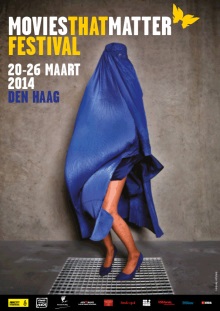
A small entry into often incredibly violent worlds. That is what the Movies that Matter Festival offers. A regular feature in The Hague for some years now, the festival took place this year between 20 and 26 March 2014. This post focuses more particularly on three movies that featured in the selection: Pussy Riot: A Punk Prayer by Mike Lerner and Maxim Pozdorovkin, Viva Cuba Libre: Rap is War by Jesse Acevedo, and Ai Weiwei: The Fake Case by Andreas Johnson.
The focus of these three movies is freedom of expression and its violation by the state apparatus. The main characters fight to speak out, either about the state itself, or at least without any censorship. The latter is of course linked to the former, given that being able to speak without limits in the societies depicted in the movies entails saying Fuck Off to the system. The means to reach that goal: art. Punk music and performance in Pussy Riot; rap music in Rap is War; and conceptual art - photography, sculptures, installations - in The Fake Case.
Context(s)
Pussy Riot is about the trial of three members of the russian punk feminist movement Pussy Riot created in 2011: Nadejda Tolokonnikova, Maria Alekhina, and Ekaterina Samoutsevitch. The three women were arrested after having staged a performance on 21 February 2012 on the soleas of the Cathedral Christ the Savior in Moscow to protest the support of the leader of the Orthodox Church to Vladimir Putin during the elections. They were sentenced on 17 July 2012 to two years imprisonment. On appeal, Ekaterina Samoutsevitch's sentence was suspended.
https://www.youtube.com/watch?v=E8K8WRRzbQs
A small entry into often incredibly violent worlds. That is what the Movies that Matter Festival offers. A regular feature in The Hague for some years now, the festival took place this year between 20 and 26 March 2014. This post focuses more particularly on three movies that featured in the selection: Pussy Riot: A Punk Prayer by Mike Lerner and Maxim Pozdorovkin, Viva Cuba Libre: Rap is War by Jesse Acevedo, and Ai Weiwei: The Fake Case by Andreas Johnson.
The focus of these three movies is freedom of expression and its violation by the state apparatus. The main characters fight to speak out, either about the state itself, or at least without any censorship. The latter is of course linked to the former, given that being able to speak without limits in the societies depicted in the movies entails saying Fuck Off to the system. The means to reach that goal: art. Punk music and performance in Pussy Riot; rap music in Rap is War; and conceptual art - photography, sculptures, installations - in The Fake Case.
Context(s)
Pussy Riot is about the trial of three members of the russian punk feminist movement Pussy Riot created in 2011: Nadejda Tolokonnikova, Maria Alekhina, and Ekaterina Samoutsevitch. The three women were arrested after having staged a performance on 21 February 2012 on the soleas of the Cathedral Christ the Savior in Moscow to protest the support of the leader of the Orthodox Church to Vladimir Putin during the elections. They were sentenced on 17 July 2012 to two years imprisonment. On appeal, Ekaterina Samoutsevitch's sentence was suspended.
https://www.youtube.com/watch?v=E8K8WRRzbQs